A recent article from the Urban Institute touches on the importance of legislative support for public transit and other transportation options that shift the public away from dependency on single-occupancy vehicles.
As gas prices continue to rise in 2026, the impact is being felt directly in household budgets across the country. According to a recent analysis from the Urban Institute, the typical American driver is spending about $65 more per month on fuel than they did a year ago and nearly $800 more annually. The increase is especially significant for households that rely heavily on driving and have fewer options for reducing their transportation costs.
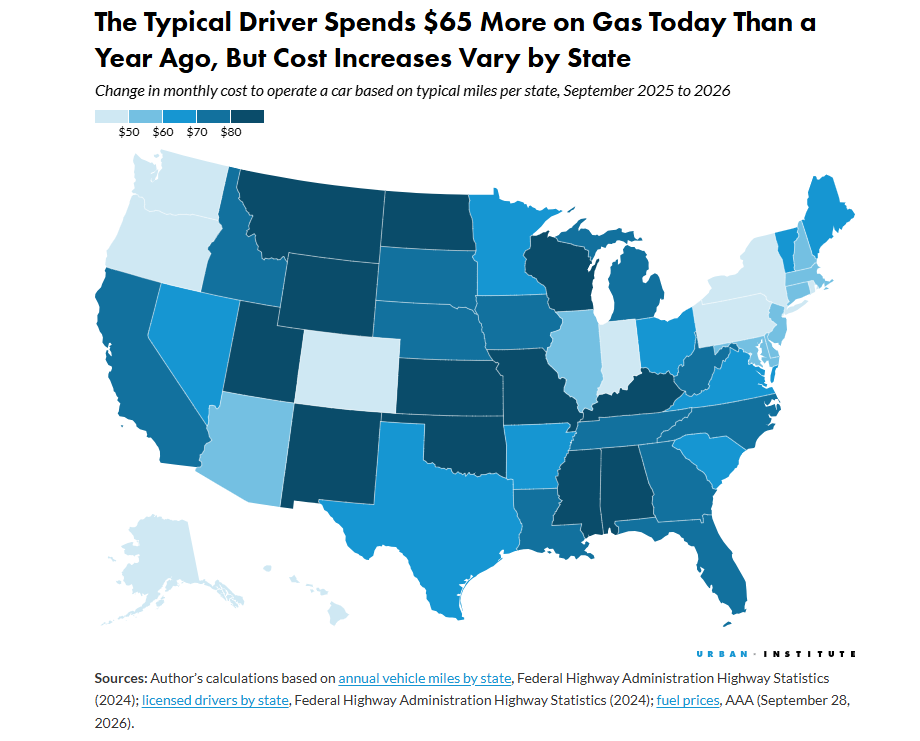
The financial burden of fluctuating gas prices varies based on where people live, how far they travel and what type of vehicle they drive. Households with lower incomes can be particularly vulnerable because transportation already represents a substantial share of their expenses. The Urban Institute notes that people who have access to reliable public transportation, walking and biking infrastructure can reduce their reliance on gasoline and, in turn, be less impacted by high gas prices.
While some short-term strategies, such as remote work opportunities, may help reduce driving, the article emphasizes the importance of creating more transportation choices over the long term. Investments in public transit, pedestrian and bicycle infrastructure can give people alternatives to driving for everyday trips. Transit-oriented development can further support affordability by encouraging housing and employment opportunities in locations where residents can more easily access transit and other destinations without a car.
Ultimately, transportation investment is a crucial component to addressing household affordability. Expanding public transit and other non-driving options can help individuals and communities become less dependent on gas while providing residents with greater flexibility in how they get to work, school, access services and other destinations. As fuel prices fluctuate, building a transportation system with more choices can help households better manage those costs and create more affordable, sustainable communities.
Access the Urban Institute’s article on this topic here.