Transit technology is evolving quickly and the 2026 APTA Tech Conference in St. Louis, MO, offered a glimpse into how agencies across the country are using new tools to improve everything from fare collection and security to maintenance, operations and the rider experience. Across the conference’s sessions, one message in particular stood out: Technology can provide transit agencies with powerful new capabilities, but successful implementation requires more than simply adopting the newest tool. Agencies must consider people, policy, data, training and the needs of their riders alongside the technology itself.
Fare Modernization
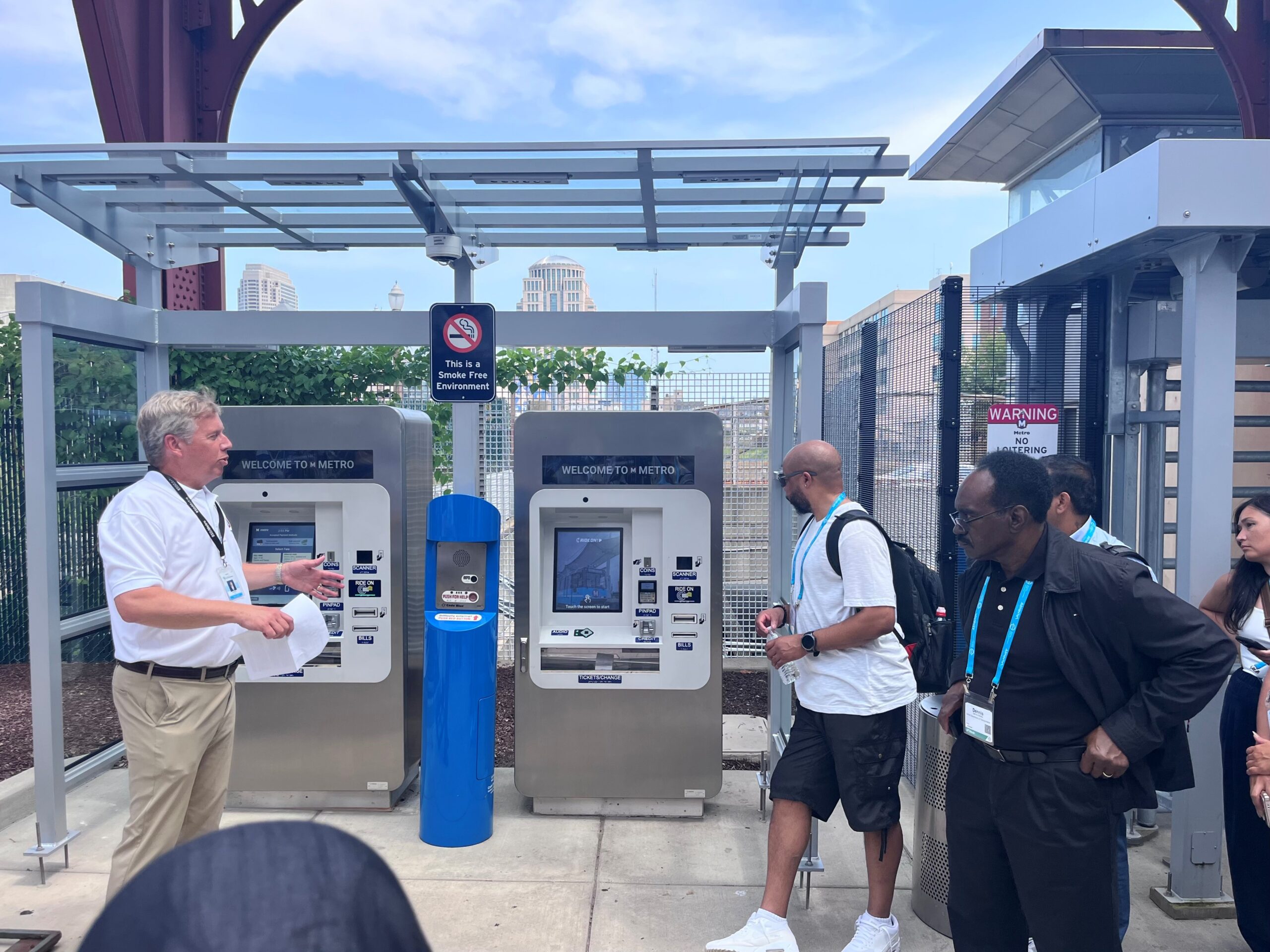
Fare collection was a major topic throughout the conference, with several sessions examining the move toward account-based ticketing (ABT), interoperable fare systems and other approaches designed to make paying for transit more convenient for the average transit rider. While ABT is celebrated for streamlining the process from purchasing fare to boarding a vehicle, presenters also acknowledged that modernization can create challenges. Riders who are unbanked or underbanked may not have access to bank cards and may prefer to continue paying with cash. Privacy concerns can also affect willingness to adopt new systems, with some riders expressing concerns about their personal data being shared, exploited or tracked.
Those concerns reinforce another important conference takeaway: fare technology and fare policy need to evolve together, and one should not move forward without the other.
AI and Transit Operations
The growing role of artificial intelligence (AI) in the transit industry at multiple levels was a prominent theme throughout the 4-day conference.
AI is already being used in a variety of transit applications. During a session on real-time security networks, presenters discussed an AI system that analyzes rider-submitted reports and identifies keywords to help prioritize reports involving injuries, problematic behavior and maintenance issues. AI is also being used to analyze information collected from transit vehicles and infrastructure. One technology presented at the conference uses sensors, including LiDAR, mounted on rail vehicles to collect information about tracks and areas alongside the tracks. That information is then analyzed by an AI system to identify potential issues such as broken ties, track problems, trespassing, vegetation overgrowth and cut fences. Transit agencies are beginning to use AI-powered chatbots to answer basic customer questions, reducing the workload on dispatchers. Predictive modeling can also help planners and schedulers understand how ridership may change when a stop is added or removed from a route.
The potential applications are broad, but presenters also emphasized the need for caution. Speakers stressed that AI can be an effective tool for providing information and supporting decision-making but it should not be making decisions on behalf of the agency for a simple reason: AI can make mistakes, and the consequences of those mistakes can extend to an agency’s operations and reputation.
Better Data = Better Decisions
While AI received significant attention, another technology-related theme throughout was the value of clean, usable data.
One session focused on TIDES, or Transit Integrated Data Exchange Specification, which can help agencies improve data quality, integrate operational data sources, and create reports and tools that support service planning and management.
The potential benefit extends to National Transit Database (NTD) reporting. Presenters noted that transit providers spend an estimated 1.1 million hours annually on NTD reporting. With operational data cleaned and organized, agencies can potentially reduce the amount of time staff spend searching for information and validating data before reporting it back to the FTA.
Another session focused specifically on treating fare collection data as an enterprise asset. The presenters emphasized that clean data gives leadership better information for making decisions, which can ultimately improve service and the rider experience, showing that the value of technology is not necessarily the technology itself but what the agency can do with the information made available by technology.
Purposeful Technology Integration
From account-based fare collection, security cameras and AI-powered reporting to predictive modeling, augmented reality training and data integration, the APTA Tech Conference demonstrated just how many ways technology is changing public transportation.
However, conference attendees were cautioned against adopting new technology for technology’s sake.
The most successful applications discussed throughout the sessions were those that addressed a specific need: making it easier to pay a fare, helping riders feel safer, identifying infrastructure problems earlier, reducing administrative burdens, improving service planning or helping employees do their jobs more effectively. One of the most fitting reminders came from a session on building a smarter transit workforce: “Technology should be a conduit, not just a solution.”
As transit agencies continue to modernize, that distinction will be increasingly important. The goal isn’t simply to make transit more technologically advanced. It is to use technology thoughtfully- to support employees, improve decision-making, and ultimately create a better experience for those who rely on public transportation.