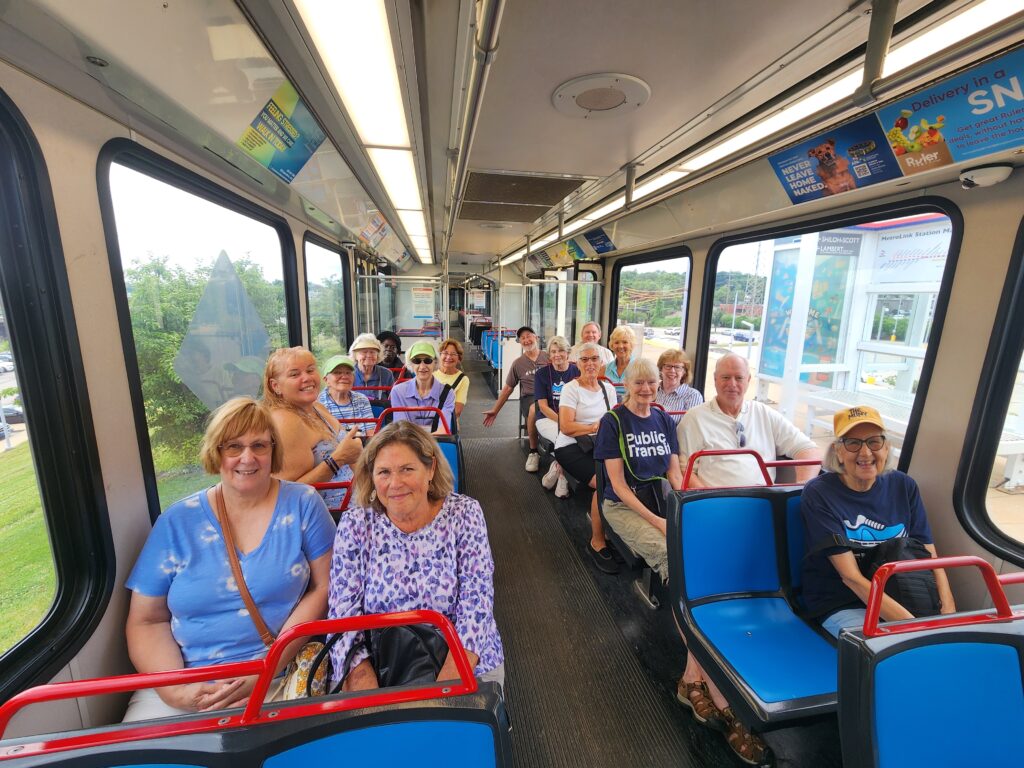
A recent Streetsblog USA article highlights an emerging challenge facing the U.S. transportation sector: a rapidly aging population. At COP30 in Brazil this past November, Sidara, an international engineering and architecture firm, presented research showing a world-wide demographic shift in which the number of people over the age of 60 will double between now and 2050. While this is a global challenge, the U.S. is somewhat uniquely challenged with both rural and urban areas that are built around the use of personal vehicles and not with those with reduced driving capabilities in mind.
The article goes on to point out that the Baby Boomer generation has shaped many of America’s automotive-centric mobility systems, influencing travel demand forecasts and policies that prioritized highways and personal vehicles in the 40s, 50s, and 60s. Now, census data indicates about 10,000 Boomers turn 65 each day, and many are nearing the age at which driving declines significantly (between 81 and 85 on average). The existing transportation infrastructure, particularly in transit-poor regions, isn’t equipped to support this shift, creating risks of isolation for seniors who lack reliable alternatives to driving.
To defuse this “demographic time bomb,” the article outlines several strategic opportunities. Cities and policymakers are urged to invest in transit improvements, redesign streets for multimodal mobility, and implement age-friendly infrastructure like benches and convenient stops. Examples cited include congestion pricing efforts in Seattle, WA, multimodal lanes in Culver City, CA, and expanded bike infrastructure in Chicago. These kinds of changes promise benefits not just for older adults but for people of all ages, making transportation systems more equitable and climate-resilient.
The Missouri Master Plan on Aging (MPA), released in late 2025, includes recommendations to make transit in Missouri more accessible to older adults. The MPA, released by the Missouri Department of Health and Senior Services, is a 10-year, action-oriented roadmap that brings together public agencies, local organizations, and communities to prepare for the future. The plan covers 7 key areas of life, including transportation and mobility as one of the categories.
The plan underscores that while recent efforts have been made to expand transportation services, access remains limited – especially in rural communities. Among its recommendations, the plan emphasizes the need for increased state investment in transportation infrastructure to leverage federal funding. According to the plan, “Strategic investment in public transit, active transportation infrastructure, and mobility services enables Missouri to more fully leverage available federal transportation funds. Prioritizing state funding helps modernize systems, improve access, and reduce long-term costs for older adults and individuals with disabilities.”
Additional recommendations include improved mobility coordination, innovation in flexible transit options and programs to assist with vehicle and driver shortages.
While older adults may not be bicycling for transportation or traveling enough on a regular basic to be adversely impacted by traffic jams, any effort to reduce the number of cars on roads can potentially allow public transit vehicles to move more quickly, allowing those riding, including older adults, to reach their destinations more quickly. The added benefit of these strategies is that it’s not only older adults who reap the rewards. Moving away from car-centric design can mean safer streets for all, from children, to the middle-aged, and beyond.
Read the full Streetsblog USA article here.
Read the MPTA’s breakdown of the Missouri Master Plan on Aging here.